
Jordan District is committed to supporting each individual's well-being through the development of skills that sustain positive behavior, social and emotional health, and academic success.
At each of our schools there are unique ways of building students' skills and supporting their wellness. Learn more about your school's approach by contacting the administration.
We shine when we are able to meet our social and emotional needs!
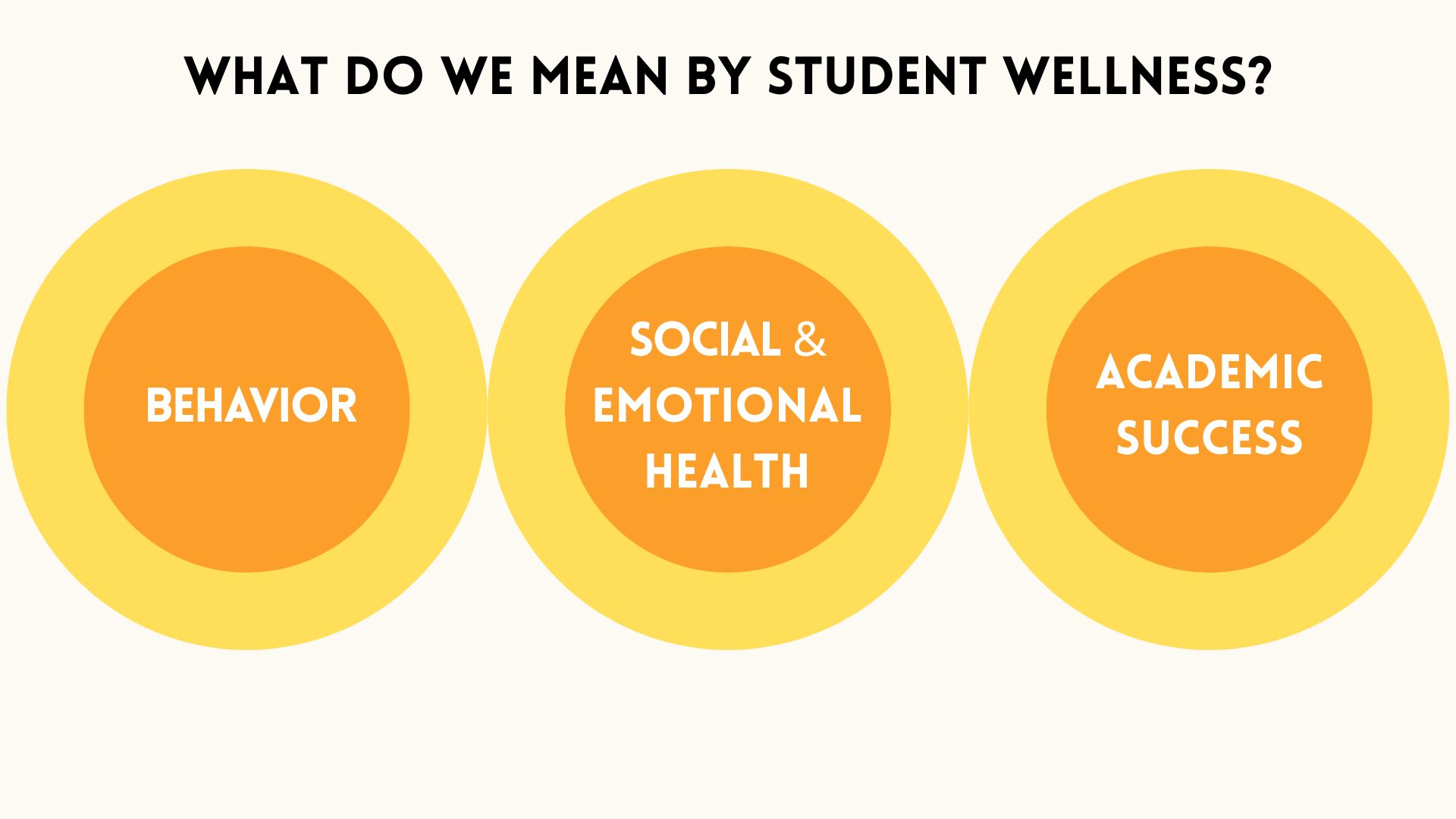
What do we mean by student wellness?
Student wellness includes all of the the following:
- Behavior
- Social & Emotional Health
- Academic Success
Each of these impact the other.
Wellness includes positive behavior, social and emotional health, and academic success, and it's important to know:
Social, emotional, behavioral, and academic skills are being taught 100% of the time...whether those “lessons” support well-being and academic success or not.
All interactions are building or reinforcing certain skills. With intentional effort, our interactions with students can build skills that support wellness!
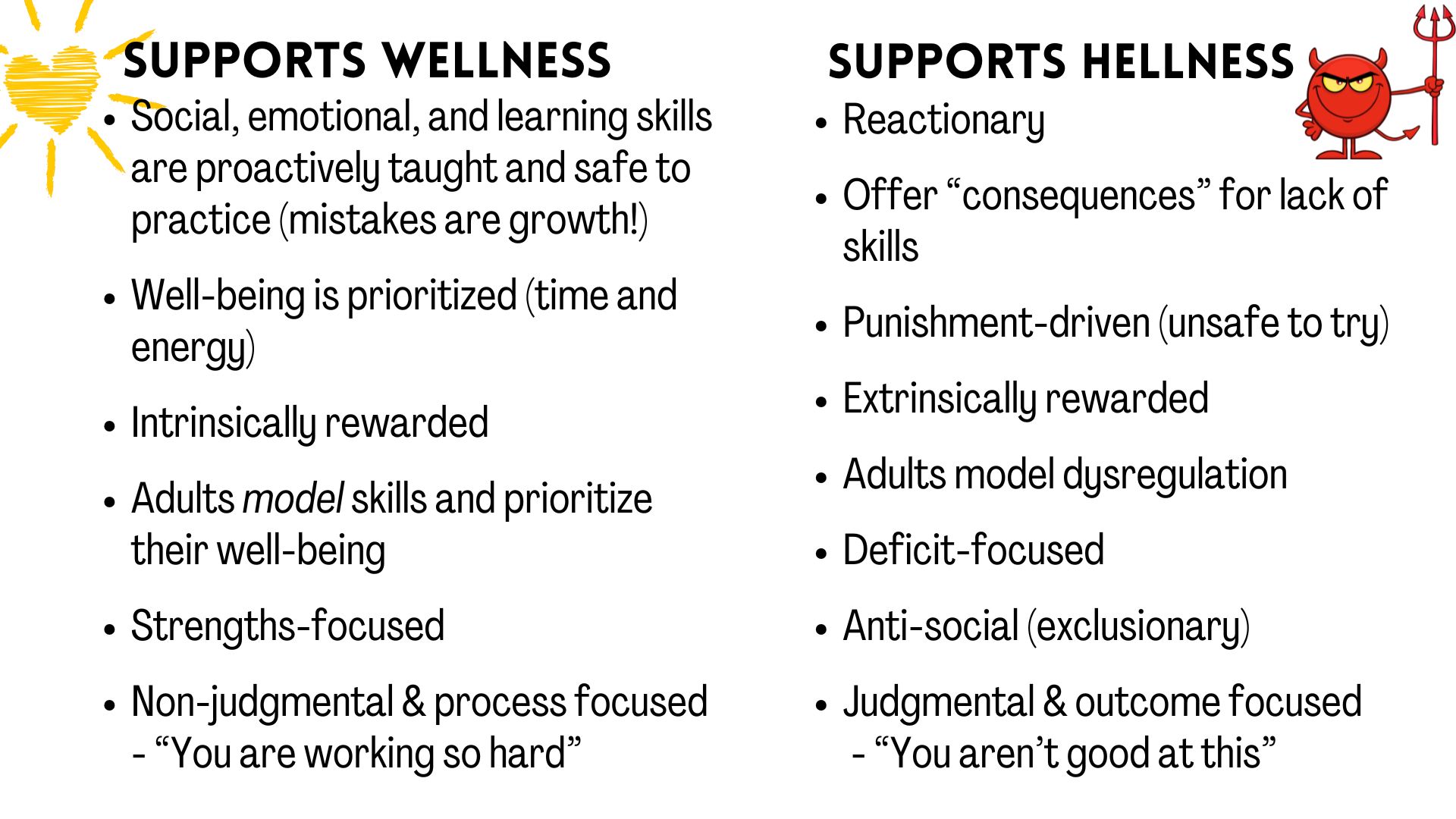
Things that support wellness in our students:
- Social, emotional, and learning skills are proactively taught and safe to practice (mistakes are growth!)
- Well-being is prioritized (time and energy)
- Intrinsically rewarded
- Adults model skills and prioritize their well-being
- Strengths-focused
- Non-judgmental & process focused
- "You are working so hard!"
Things that create the adverse effect:
- Reactionary
- Offers "consequences" for lack of skills
- Punishment driven (unsafe to try)
- Extrinsically rewarded
- Adults model dysregulation
- Deficit-focused
- Anti-social (exclusionary)
- Judgmental and outcome focused
- "You aren't good at this!"
The chart below defines some of the skills that support social and emotional health.
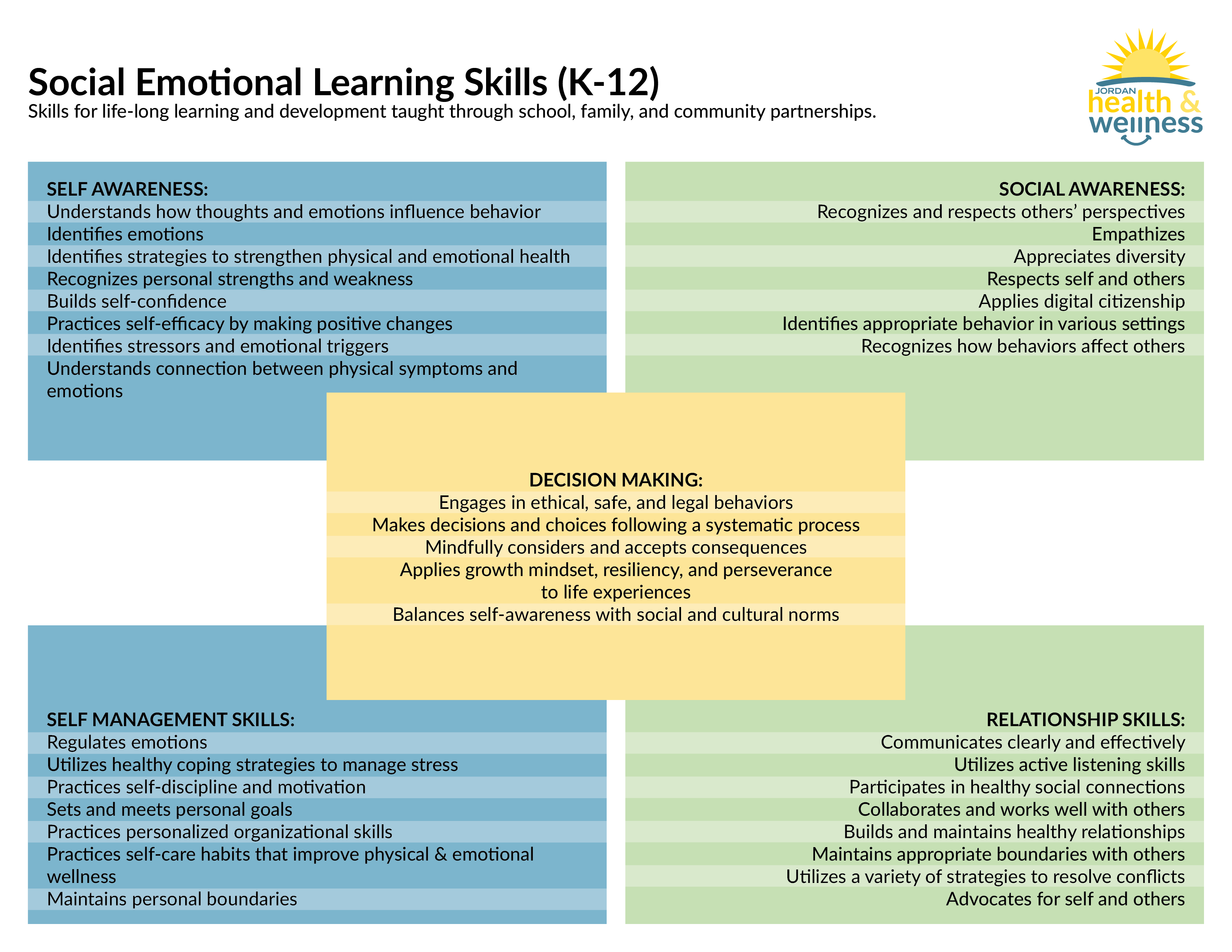
Social Emotional Learning Skills (K-12)
Skills for lifelong learning and development taught through school, family, and community partnerships.
Self Awareness:
- Understands how thoughts and emotions influence behavior
- Identifies emotions
- Identifies strategies to strengthen physical and emotional health
- Recognizes personal strengths and weaknesses
- Builds self-confidence
- Practices self-efficacy by making positive changes
- Identifies stressors and emotional triggers
- Understands connection between physical symptoms and emotions
Social Awareness:
- Recognizes and respects others' perspectives
- Empathizes
- Appreciates diversity
- Respects self and others
- Applies digital citizenship
- Identifies appropriate behavior in various settings
- Recognizes how behaviors affect others
Self Management Skills:
- Regulates emotions
- Utilizes healthy coping strategies to manage stress
- Practices self-discipline and motivation
- Sets and meets personal goals
- Practices personalized organizational skills
- Practices self-care habits that improve physical and emotional wellness
- Maintains personal boundaries
Relationship Skills:
- Communicates clearly and effectively
- Utilizes active listening skills
- Participates in healthy social connections
- Collaborates and works well with others
- Builds and maintains healthy relationships
- Maintains appropriate boundaries with others
- Utilizes a variety of strategies to resolve conflicts
- Advocates for self and others
Decision Making:
- Engages in ethical, safe, and legal behaviors
- Makes decisions and choices following a systematic process
- Mindfully considers and accepts consequences
- Applies growth mindset, resiliency, and perseverance to life experiences
- Balances self-awareness with social and cultural norms